Report on the 30th biennial conference of the International Peace Association (IPRA)

BY DR HEATHER DEVERE, IPRA programme coordinator and chair of Asia Pacific Media Network (APMN)
Venue: New Plymouth/Ngamotu, Aotearoa New Zealand, November 2025
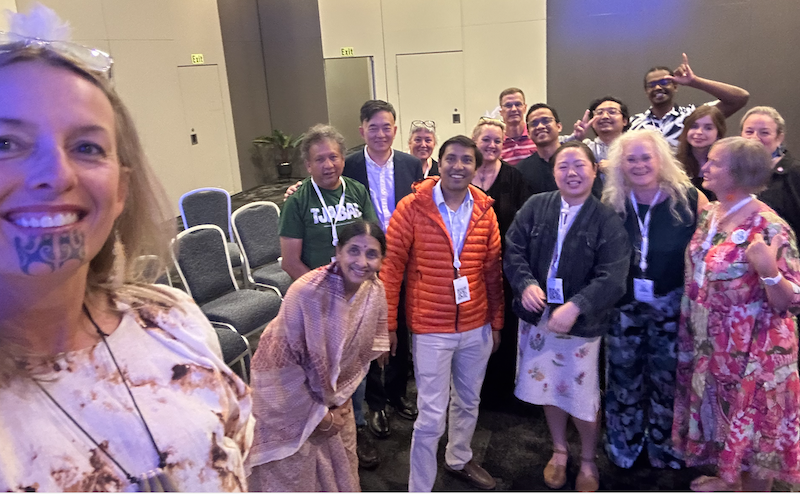
The International Peace Research Association (IPRA) held its biennial conference for the first time in Aotearoa, and for the first time the conference had a focus on Indigenous Peace, Resistance, and Reconciliation.
Over 200 participants from 40 different countries, including Algeria, Argentina, Australia, Bolivia, Canada, China, Columbia, East Sudan, Ecuador, Fiji, France, Germany, Ghana, Hawai’i, Honduras, Hungary, India, Ireland, Italy, Japan, Kenya, Maohi Nui (French Polynesia), Mexico, Palestine, Puerto Rico, Scotland, Solomon Islands, South Africa, South Korea, Spain, South Sudan, Switzerland, Thailand, Trinidad and Tobago, Uganda, UK, USA, West Papua, and Zimbabwe, met together in discussion, debate and activities designed to address issues relating to peace and justice both locally and internationally.
Held at a time of extreme international insecurity, Aotearoa offered a place of respite, especially to those coming from regions of ongoing and intractable conflict. The challenges still seem insurmountable, but inspiration, reflection and interchange gave hope to some, and small comfort to others.
Over 200 participants from 40 different countries, including Algeria, Argentina, Australia, Bolivia, Canada, China, Columbia, East Sudan, Ecuador, Fiji, France, Germany, Ghana, Hawai’i, Honduras, Hungary, India, Ireland, Italy, Japan, Kenya, Maohi Nui (French Polynesia), Mexico, Palestine, Puerto Rico, Scotland, Solomon Islands, South Africa, South Korea, Spain, South Sudan, Switzerland, Thailand, Trinidad and Tobago, Uganda, UK, USA, West Papua, and Zimbabwe, met together in discussion, debate and activities designed to address issues relating to peace and justice both locally and internationally.
Held at a time of extreme international insecurity, Aotearoa offered a place of respite, especially to those coming from regions of ongoing and intractable conflict. The challenges still seem insurmountable, but inspiration, reflection and interchange gave hope to some, and small comfort to others.
Ongoing concern is expressed in the two statements issued at the conference.
A Statement of Solidarity was adopted by IPRA adding the voices of visiting representatives from nations around the world enduring conflict, displacement and colonial legacies to "echo and amplify the concerns expressed by Māori leaders regarding the escalation of racialised hate, particularly towards Māori, Pasifika, Muslim and migrant communities from the current New Zealand government".
The second resolution called for "Perpetual Peace for Humanity’s Survival" imploring the United Nations and "the great nuclear powers" to recognise the need for perpetual peace for an indivisible humanity "without any racist hierarchies of peoples and ethnicities in one harmonious, multipolar world order".
The very warm hosting by local iwi was acknowledged by the international guests who were inspired by the inclusivity and extent of the manākitanga demonstrated. Māori speakers expressed gratitude to the visitors for sharing their experiences and knowledge.
Post a reply