USP academic calls for better press freedom protections in face of Fiji’s declining media trust
PACIFIC MEDIA WATCH: By Cheerieann Wilson of The Fiji Times in Suva
Public trust in Fiji’s mainstream media has significantly declined, a journalism academic has told the Truth and Reconciliation Commission, citing decades of political upheaval, censorship and institutional pressure.
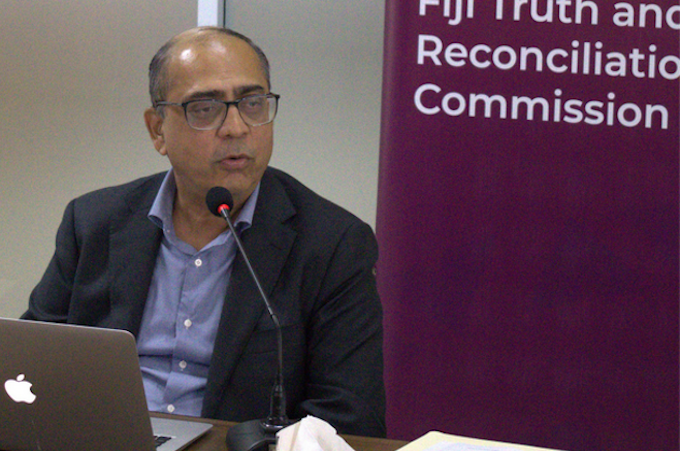
At its third expert hearing in Suva, the commission heard from University of the South Pacific’s associate professor of journalism Shailendra Singh, who detailed how censorship, intimidation and political pressure had weakened the media landscape over decades.
Dr Singh, who is contributing to the commission’s media chapter, told the TRC that repeated disruptions — including the 1987, 2000 and 2006 coups — had lasting consequences on press freedom and public discourse.
Drawing on more than 30 years of experience, he outlined how newsrooms faced closures, financial strain and the loss of skilled journalists, contributing to declining editorial independence and professional standards.
He said journalists were often forced into difficult ethical positions, navigating threats and highly polarised environments, which led to self-censorship, and, at times, uncritical reporting aligned with dominant political narratives.
He described the 2000 and 2006 coups as defining moments for the industry.
The 2006 period, he noted, brought the most stringent controls, including the introduction of the Media Industry Development Act 2010, which entrenched censorship and self-censorship in newsrooms.
Steady decline in public confidence
The long-term impact, he said, had been a steady decline in public confidence.
Dr Singh told the commission that perceptions of bias and compliance had contributed to the erosion of trust, with some members of the public even supporting tighter media control.
At the same time, restrictions on traditional media created space for alternative platforms such as blogs, social media and diaspora outlets — opening new avenues for expression but also raising concerns around misinformation and accountability.
Despite the repeal of the MIDA legislation in 2023, Dr Singh said the sector continued to grapple with its legacy, including financial instability, skills shortages and the risk of renewed political interference.
He recommended stronger legal protections for press freedom, improved training to lift professional standards, greater media literacy and independent regulatory mechanisms.
Republished from The Fiji Times and Asia Pacific Report with permission. Associate professor Shailendra Singh is an APMN member.
Post a reply